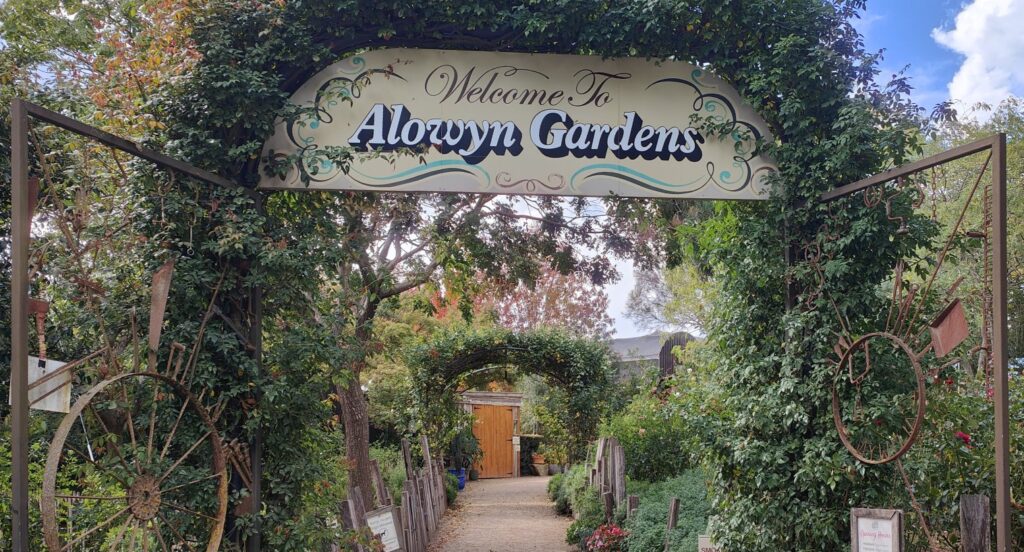
Recently I went on a day trip to Alowyn Gardens, a display garden and plant nursery about an hour’s drive NE of Melbourne. The trip was organised for supporters of the Epworth Medical Foundation, which supports Melbourne’s non-profit Epworth hospitals. Previously I’d driven past the entrance to the gardens many times but never had time to investigate. Now was my chance.
The current owners, Prue and John Van de Linde, purchased the site, then a rundown horse stud, in 1997. Their original plan was to turn it into a tree nursery and display garden but a lack of water and the poor soil put paid to this. Instead, over the next twenty years today’s display garden, nursery and cafe took shape.
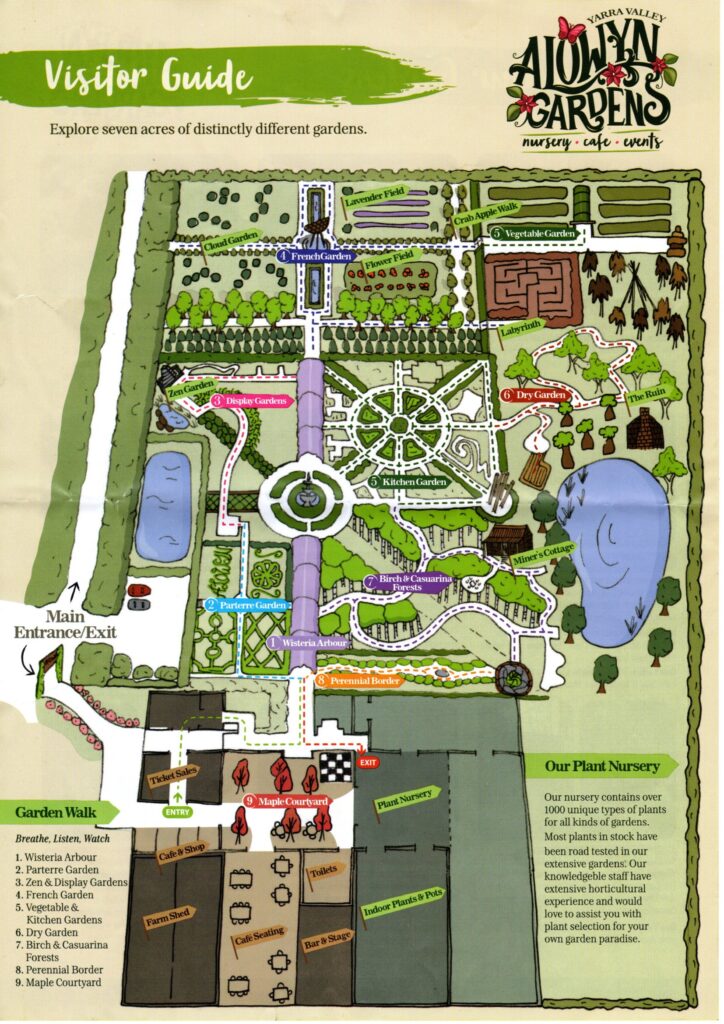
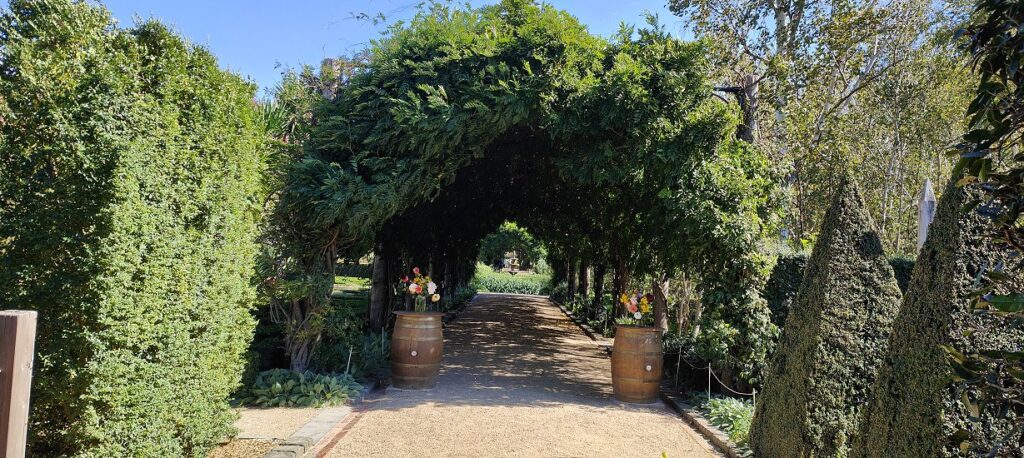
The design takes account off the harsh climatic conditions in the Yarra Valley. Most runoff rainwater is collected via an elaborate system of underground pipes. This water is drained into the wetlands and dam for use back on the gardens. To cope with high temperatures and dry summers the garden has been designed with shade in mind by including avenues of trees, the wisteria arbour and birch and casuarina forests. Using mulch and plants helps shade the roots of plants and trees, also helping fungi and bacteria and earthworms. All organic waste is composted and added back to the soil to improve conditions.
In short, the overall aim was to design a garden with lots of shade for visitors and lots of plants that enjoy protection from the hot northerly winds in the summer. It is now actually possible to walk around the whole of the garden predominantly in the shade.
We had near perfect weather for our visit and after spending time exploring, we gathered at the café for an excellent lunch, then back to Melbourne. Many thanks to EMF for organizing this trip.
Of special note
Why Alowyn?
Alowyn Gardens is named after a combination of the owners’ names, Aloysius (John) and Olwen (Prue). In 2008 they were named as ABC’s Gardening Australia’s ‘Gardener of the Year‘ winners.
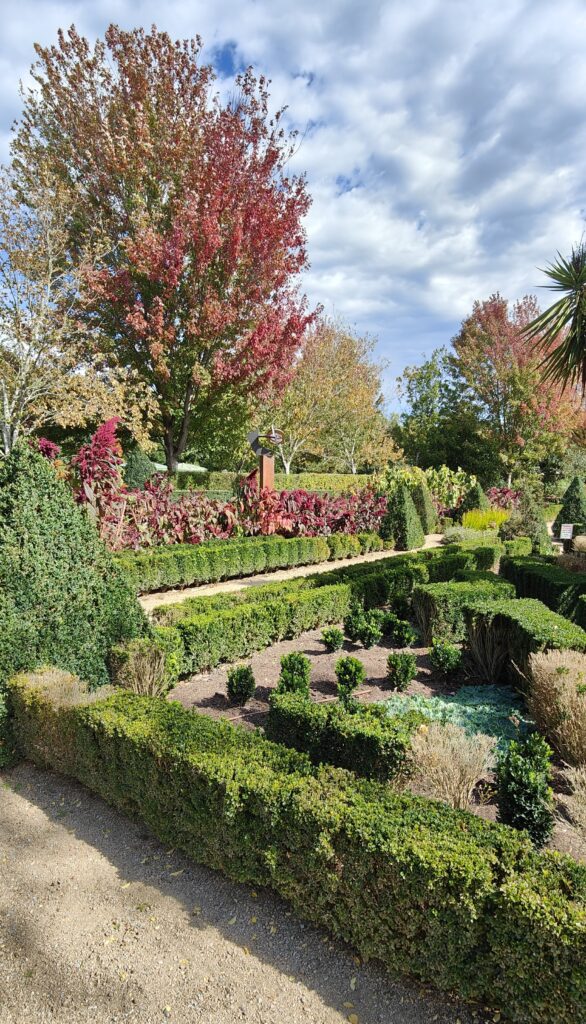
The Parterre Garden
A parterre is a formal garden construction on a level surface consisting of planting beds, edged in stone or tightly clipped hedging and gravel paths arranged to form a pleasing, usually symmetrical pattern. Parterres need not have any flowers at all. The parterre was developed in France by Claude Mollet, the founder of a dynasty of nurserymen-designers that lasted deep into the 18th century.
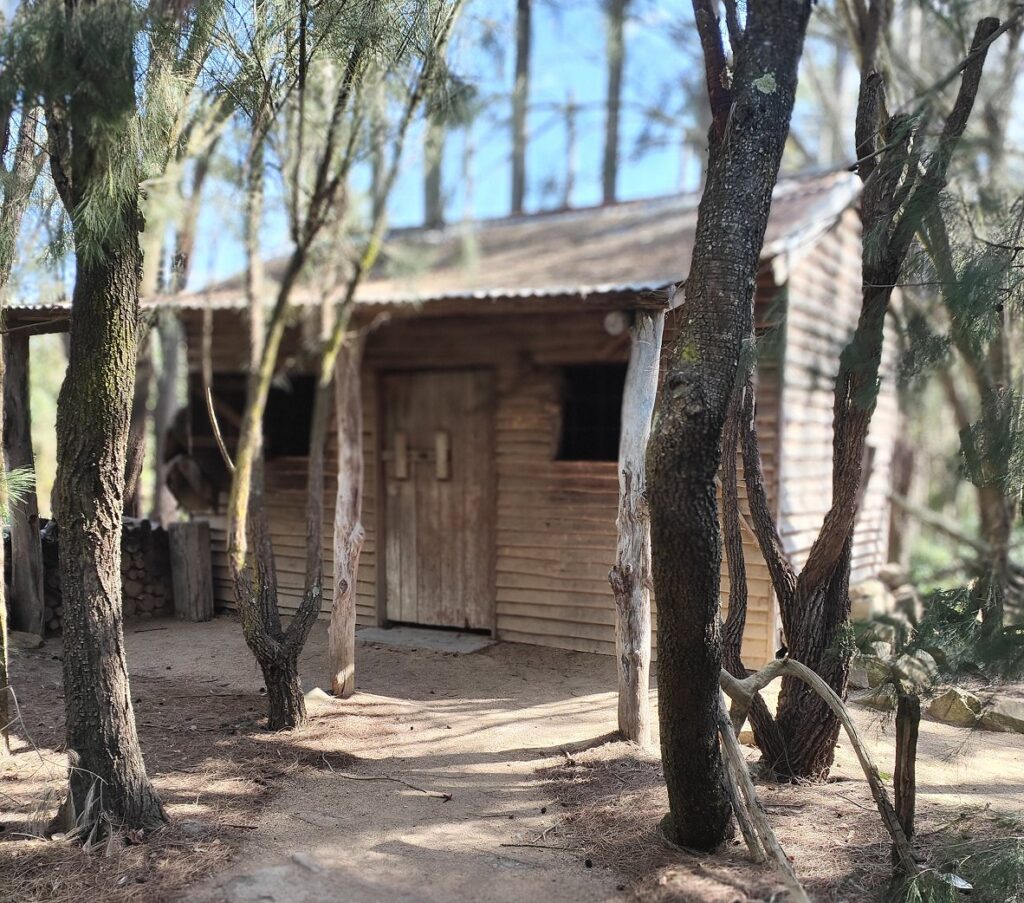
The Miners Hut
This hut was built in 2001 with recycled materials, except for the outside weatherboards. These use radial sawn Victorian plantation grown hardwood. The Miners Hut is an example of a simple types of structure that used to be in this area around the turn of the century. The Hut is used to house some early tools and implements used in the 1900s that have been collected over the years.