Chapel Next the Green (the history of Twickenham Congregational Church) index page
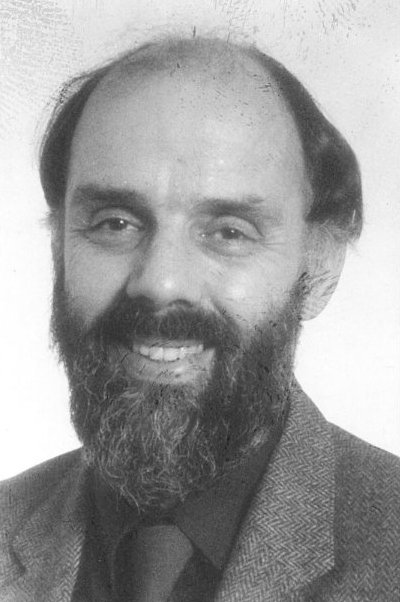
It was to be nearly a year before the right successor to Mr Willmot was found. Several possible candidates suggested by the Moderator were approached, but were not endorsed by the Church. The deacons were almost on the point of advertising in the ‘Congregational Monthly‘ when Mr John Belderson, Lay Pastor of Oaklands Church, Shepherds Bush, was commended to them. Mr Belderson was born in Uganda (where his father was serving as a Colonial Audit officer) and had subsequently lived in Malaya, Singapore and Southern Africa, qualifying as an architect before coming to England to study church architecture. Feeling a call to the ministry he had trained at New College as a part-time student whilst working as an architect to support his family. In June 1965 he was invited to preach ‘with a view‘. His quiet and thoughtful manner impressed many and he was invited to accept the pastorate.
In August he began his ministry at Twickenham and was ordained on September 9th. The charge to the Church was given by the Rev Elsie Chamberlain who urged the members not to hold their young minister back, telling them “he will have up-to-date ideas and it is up to you to help him rake up the challenge”. This was to be a time of challenge. In May 1966 the new LCU London Moderator, the Rev Richard Hall, addressing the Church Meeting “gave an insight into the changing times and the colossal task we had before us, almost an impossible one”.
Changes of all sorts were to dominate Mr Belderson’s pastorate. The denomination itself was changing. In May 1966 the CUEW, a federation of independent Churches, had become the Congregational Church in England and Wales (CCEW) , a move that would have been unthinkable a hundred years earlier; Joseph Parker, chairman of CUEW in 1901 had advocated such a move with no success. The London Missionary Society became the Congregational Council for World Mission, CCEW and the Presbyterian Church of England being two of the worldwide sponsoring Churches. Union with the Presbyterian Church was a dominant subject of discussion following the publication of the ‘Basis for Union’ in 1967.
Local changes were in evidence too. The CCEW Assembly in May 1967 suggested that alternative forms of ministry to ‘one church, one minister” might be explored. That year, in consultation with the churches at Hampton Hill, Richmond (St Pauls) and East Sheen , it was decided to form a ‘Team Ministry which was inaugurated at a service held at St Pauls in January 1968. Under the new preaching plan, each month each minister conducted worship five times in his own church and once in each of the others. Spurred on by the enthusiasm of the ministers involved, ‘Ted’ Hunter (HH), Roy Bones (R), Roy Boulter (ES) and John Belderson himself the scheme was generally well received particularly by regular worshippers who appreciated the differing presentations of the gospel and got to know the other preachers. The main disadvantages were that each minister might not get to see casual attenders for weeks on end and getting to know newcomers was made more difficult The constraints of the preaching plan also made it harder for an incoming minister to get to know his congregation. As the original ministers moved on enthusiasm for pulpit exchanges lessened, and by 1982 they were infrequent. Other team events included social events, and regular joint services.
An early topic discussed at Church Meetings was ‘Family Church reappraised’ . With three children of his own, Linda, Martin and Christine, in the Sunday School, Mr Belderson took a keen interest in children’s work. During his pastorate a quarterly meeting of all youth leaders was started, which enabled closer coordination between the Sunday School, Guides and Brownies, particularly when it came to planning parade services. For several years before ‘Partners in Learning’ first appeared, Mr Belderson devised an integrated course of learning for adults and children. Unfortunately for Twickenham, many young people went off to university and unable to afford the high cost of housing did not return.
For many years members had assisted the Minister with Visiting but this was taken further in 1967 when nineteen members were commissioned as ‘Church Friends’, each being responsible for several members. A concern for community needs led to the Twickenham Churches forming the volunteer ‘Fish Scheme’ in1969. The scheme continued under the name ‘HANDS’ (Help a neighbour in distress). 1969 also saw the first 1% appeal for world poverty, repeated at each Harvest Festival since. Such concerns were a feature of this pastorate. On more than one occasion the Belderson family gave up part of their Christmas day to host a dimer at the church for people who would otherwise have been on their own.
Within the Church there were changes of personnel. Mr Derek Smith, Co-secretary from 1964, took over the leadership of the Sunday School from Mr Stockdale in 1968. Mrs Elsie Davies, who had succeeded Miss Gladys Mills as Co-secretary in 1966, continued with the duties single-handed. 1968 also saw Mrs Emily Cumber become a Life deacon, in honour of her long and devoted service to the Church. Mr Faers continued as Treasurer, completing 25 years service in 1971.
Times of services were reviewed and in Spring 1971 were, as an experiment, moved to 10a.m. and 7p.m. The former was quickly changed to 10.30a.m.; subsequently the evening service reverted to 6.30p.m.
With an former architect as minister the buildings were not neglected. Indeed, Mr Belderson’s ability was to benefit the locality when he became the first chairman of the Twickenham Green Residents Association, founded in 1969 to safeguard the amenity of the area.
A loan from the LCU towards the rebuilding of the kitchen was repaid in 1964, enabling further projects to be considered. In late 1965 a Building Committee was constituted to deal with future building work. It decided that the priority was the church roof, still half tiled and half slated. Following a ‘Raise the Roof ‘ Bazaar and many other efforts the tiled part of the roof was finally replaced with slating in 1968. Mr Belderson then approached a fellow architect to produce a for improving the church interior. Among his suggestions, some of which were subsequently implemented, were improving the end wall, provision of a flat concrete floor, chairs instead of pews, a suspended ceiling, moving the organ to the front of the gallery, and repositioning the pulpit to one side. Action on these was deferred whilst a fund was started to rebuild the large vestry and toilet accommodation. By the end of the pastorate nearly £2000 had been raised for this scheme.
Donations had paid for other changes. In 1966 thanks to an anonymous donor, an induction loop amplification system was installed for the benefit of the hard of hearing. In 1970 the uninspiring end wall of the church was transformed with cedar cladding, paid for by several donations and legacies. The illuminated cross, made by Bernard Sanders of East Sheen Church, is in memory of Mrs M.Liversage, a deacon for many years. In 1971 a gift, of high level lighting in the church, was accepted, giving the church a much more open appearance.
In May 1971 Mr Belderson accepted an invitation to the pastorate of West Park Church, Leeds. He and his family left Twickenham at the end of July. Several matters which had received attention during his ministry were to come to fruition during the six-month interregnum that followed.
Vote for Union
The Church has never marked time during an interregnum – indeed the term, in its literal sense, has no meaning in a Free Church. It has however been the usual custom to delay important decisions until a new minister is secured but during the second part of 1971 the Church had to make one of the most important decisions in its history.
On September 28th a Special Church Meeting was held to vote on the ‘Scheme for Union’. By a majority of 37 to 1 it was resolved:
“. . .to unite with other member churches of the Congregational Church and with the congregations of the Presbyterian Church of England to form one united Church under the name of the United Reformed Church (Congregational-Presbyterian) in England and Wales …”
The union took effect on October 5th 1972.
At the same church meeting consideration was also given to a more mundane subject the rebuilding of» the large vestry and toilet block, the cost of which was increasing faster than money could be raised. In November 1971 approval was given to a revised scheme necessitating the rebuilding of the toilet block only. The work was carried during the summer of 1972 the LCU again providing loan and grant assistance.
← Andrew Willmot, 1955-1964 – – – Harold Bennett, 1972-1985 →