Over 18 years I’ve driven past Melbourne General Cemetery many times but until this month I’d never visited it. Finally I have. Melbourne was first settled by Europeans in 1835 and they established their first cemetery in 1837, where the Queen Victoria Market now is. The goldrush-fuelled growth of the city led to this cemetery being closed to new grave site sales in 1853, though the last burial only took place in 1922. About 100,000 people were buried there; 10,000 were exhumed during later construction work leaving around 90,000 left buried below today’s car park.
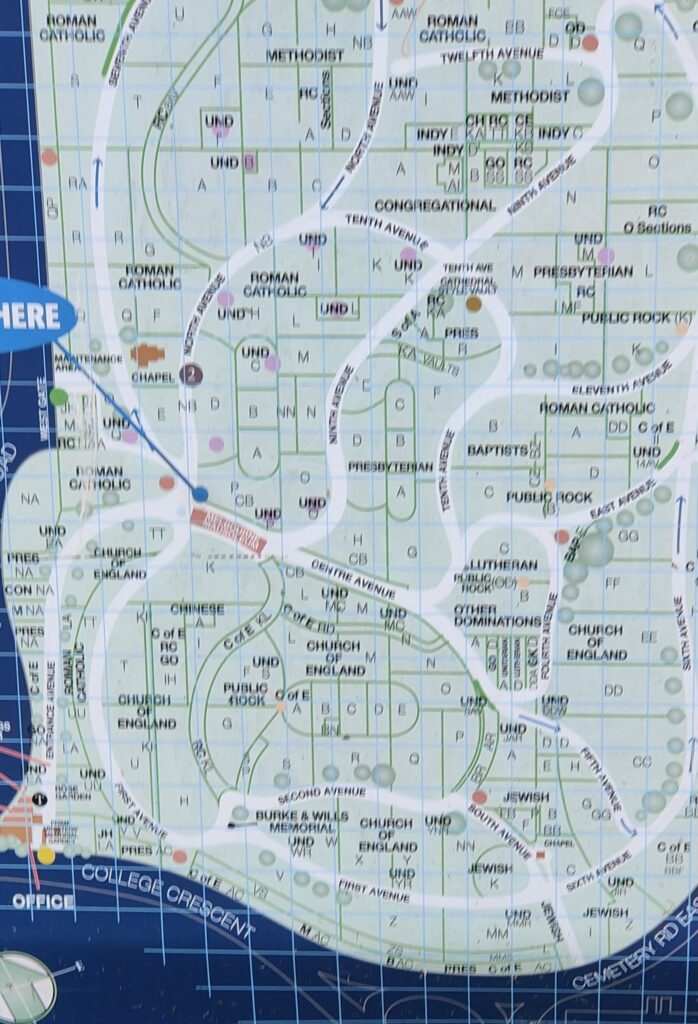
To meet the need for burial space, land for a 106-acre new cemetery – to be known as the Melbourne General Cemetery – was purchased in Carlton, just north of the city centre. It was the first Victorian cemetery to be designed as a large public park. The first burials took place in 1853 and more than 300,000 people would be buried before it was closed for new burials in 1904 when Fawkner and Springvale cemeteries were established.. It reopened in 1927 and expanded in 1933.
The lodge was rebuilt in 1934-5 using materials salvaged from the original 1850s building. The last family to live here moved out in 1997. It’s now used as a workspace and office
Here, in alphabetical order, are some notable graves. I didn’t have time to explore the whole cemetery.
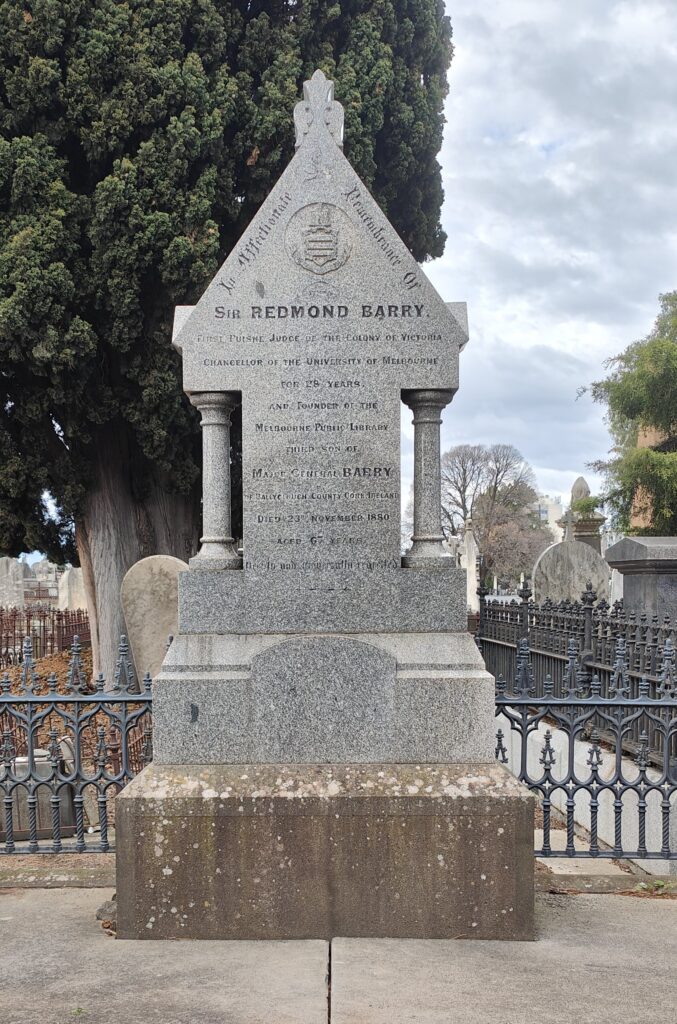
Sir Redmond Barry (1813-80): Born in Ireland, admitted to the Irish Bar in 1838, then Lincoln’s Inn, arrived in Melbourne 1839. In 1851, when the Port Phillip District was separated from New South Wales to become the colony of Victoria, Barry was appointed its first solicitor-general, a position which he held briefly, before he was elevated to the new bench of the Supreme Court of Victoria in January 1852.
Barry was the founder of the University of Melbourne, of which he was first chancellor (1853), a position he held till his death. With Governor La Trobe he was behind the formation of the Melbourne Public Library (now the State Library of Victoria), its associated Art Gallery and the Royal Melbourne Hospital.
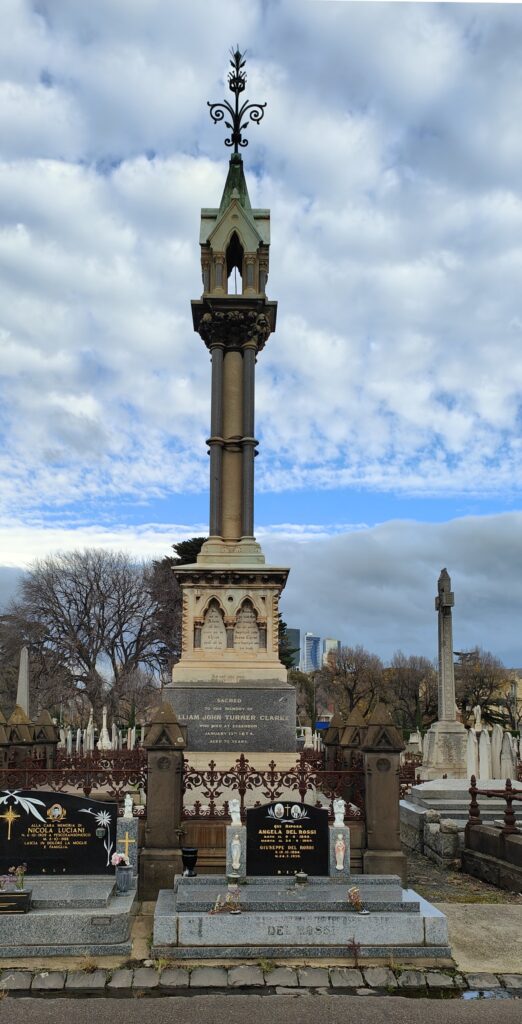
William John Turner Clarke (1805-74): Born Somerset, England. Ill health forced moves to Tasmania then Victoria. He introduced the Leicester breed of sheep into Australia. The gold rush further increased his prosperity and meat sales boomed. The money received from his wool clips was lent at high interest to Australian import houses. In time he acquired the reputation of being the richest man in Australia – his estate totalled £2,500,000, as well as 215,000 acres (87,008 ha) of freehold land. He was a member of the Victorian Legislative Council from the inauguration of responsible government in 1856 until 1870.
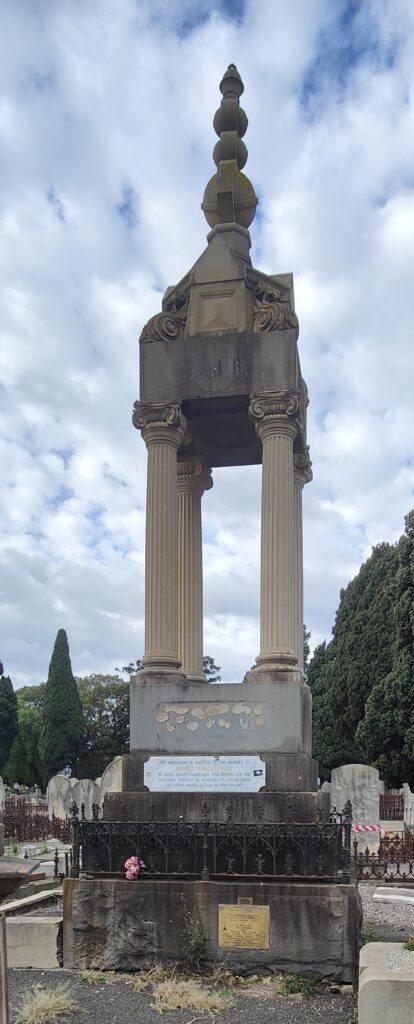
James Galloway (1828-60): Born Springfield, Fife, Scotland, came to Melbourne 1854. He joined the Operative Masons’ Association, an early trade union. On 21 April 1856, they led a march from their construction site at the University of Melbourne to Parliament House, demanding the introduction of an eight-hour working day, for the same wages as the existing ten-hour day. Subsequently Galloway became ill and destitute, dying in Collingwood, Victoria in 1860, aged just 32.
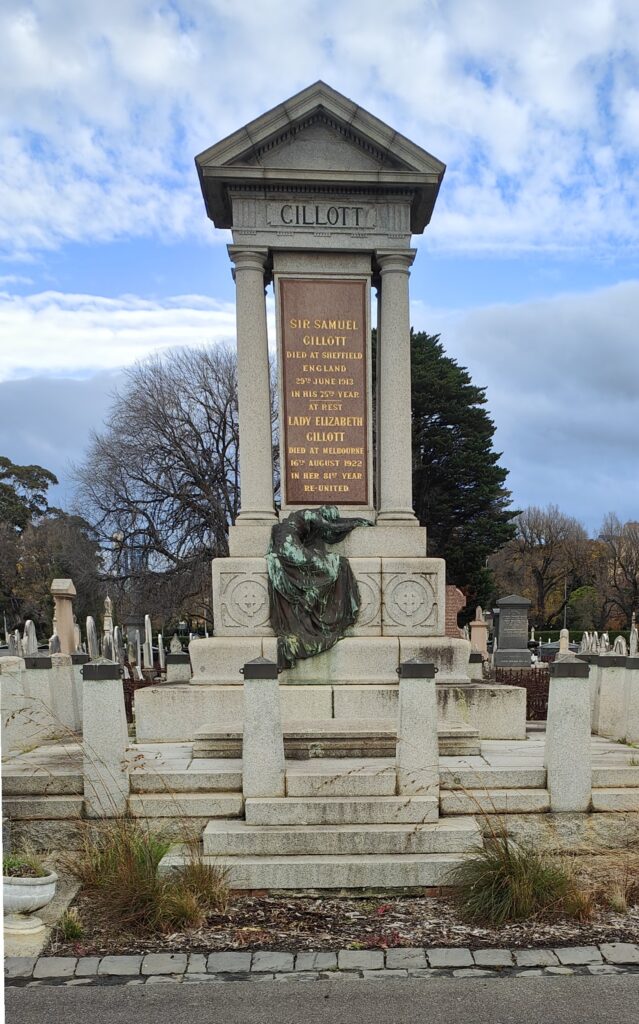
Sir Samuel Gillott (1838-1913): Born Sheffield, England. Eminent lawyer, member of the Legislative Assembly 1899-1906, Lord Mayor of Melbourne 1896-1899, Lord Mayor of Melbourne 1896-1899. His legal practice made him very rich. His political career ended when journalist John Norton published an attack on Gillott entitled ‘Lechery and lucre’ accusing him of lending money to Caroline Pohl, or ‘Madam Brussels’, Melbourne’s leading madam, and detailing financial dealings between them dating back to 1877. To escape the scandal he went back to England for a year. His end came on another visit to England in 1913 at when he fell down a flight of stairs at night. His body was returned to Australia for burial in the Melbourne cemetery.
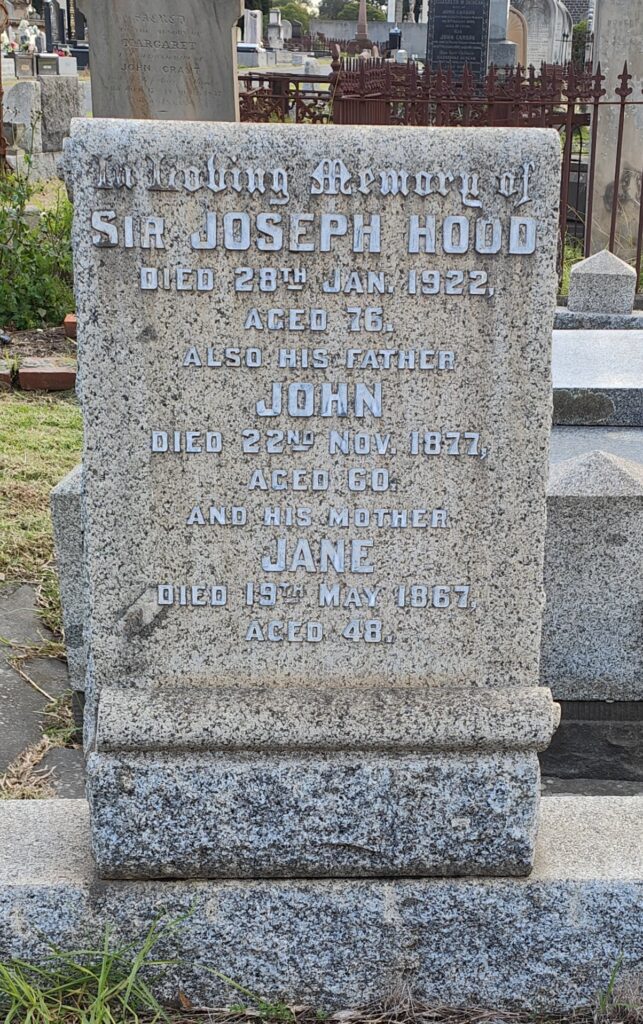
Sir Joseph Hood (1846-1922): Born in Melbourne. He was called to the Bar in 1868, then was appointed an acting judge of the Supreme Court of Victoria in 1890. He was the first barrister born and educated in Melbourne to reach the bench. He was knighted in 1920 then resigned in 1921 on the ground of ill health, having been on leave for twelve months. He died at his home in East St Kilda in January 1922 and was buried in Melbourne general cemetery.
Sir Charles Hotham (1806-55): Born in Suffolk, England. He joined the British Navy in 1818, serving in Africa and South America. In 1853 he was appointed as Lieutenant-Governor of Victoria, succeeding Charles La Trobe. After a troubled time – the Eureka Stockade, December 1854, took place under his governorship and public opinion held him to be the man most responsible for the massacre – he submitted his resignation on 17 December 1855. Sadly he caught a chill while opening the Melbourne gasworks and died on the 31st. The monument, 18 metres tall, erected in 1858. The monument was designed and built by architect George Gilbert Scott and sculptor John Birnie Phillip in England, then shipped from England to Australia in pieces and erected by Melbourne architects Knight and Kerr. In 1996, due to structural issues In 1996, the monument was partially dismantled and temporarily removed from the site. It’s since been restored and re-erected.
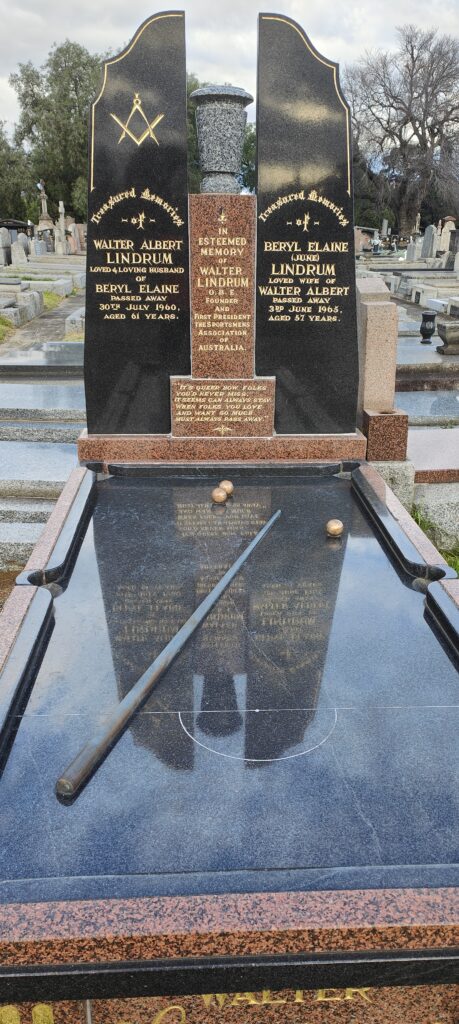
Walter Lindrum (1898-1960): The most visited grave in the cemetery and one of the most interesting. It is in the shape of a billiard table, complete with cue, balls, pockets, and coins along the side. Lindrum was no ordinary billiards player: he was the best in the world from 1933 to 1950, when he retired undefeated. He died while on holiday in Queensland. His body was returned to Melbourne, and he was given a state funeral attended by 1,500 people.
Sir John O’Shanassy (1818-83): Born in Ireland, came to Australia 1839. Initially he settled in Westernport, moving to Melbourne where he opened a small drapery shop in Collins Street on 26 May 1845. Later he transferred to Elizabeth Street; for about ten years he was a successful draper, largely through his wife’s shrewd business sense and perseverance. In 1851 he was elected to the newly-established Victorian Legislative Council, moving to the Legislative Assembly in 1856. He served two short periods (1857 and 1858-9) as Victoria’s second premier. He retired from Parliament in February 1883, and died soon after.
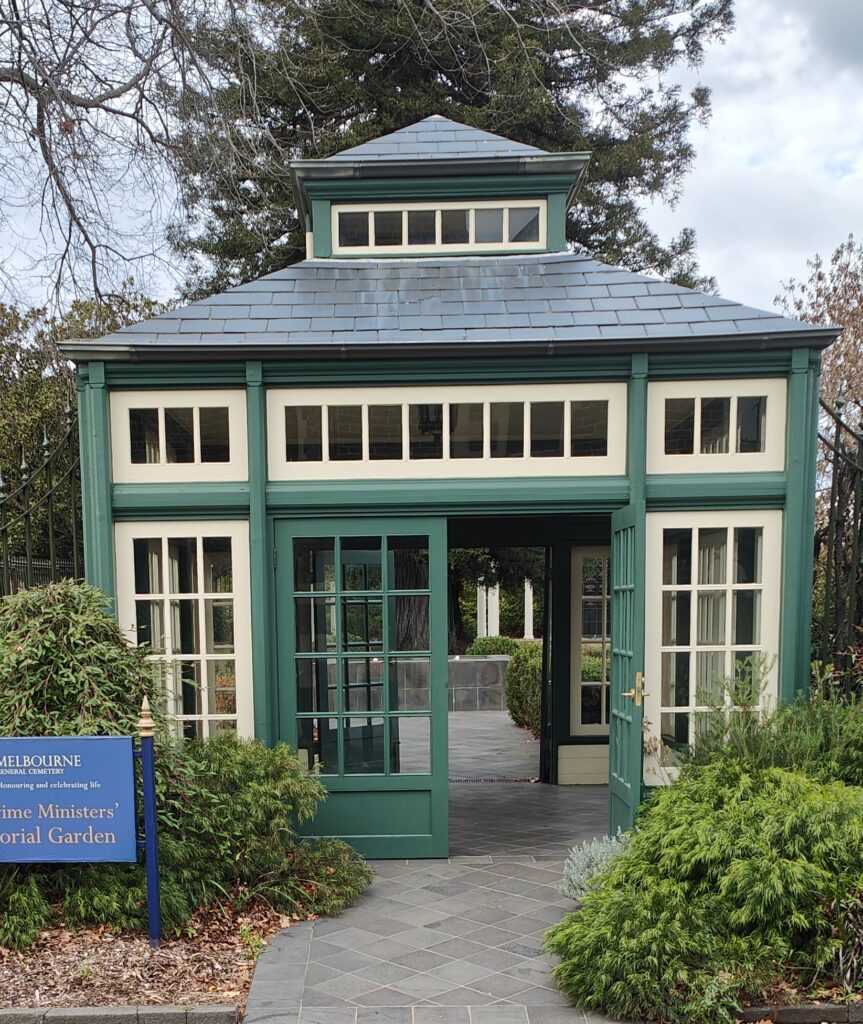
Prime Ministers Memorial Garden
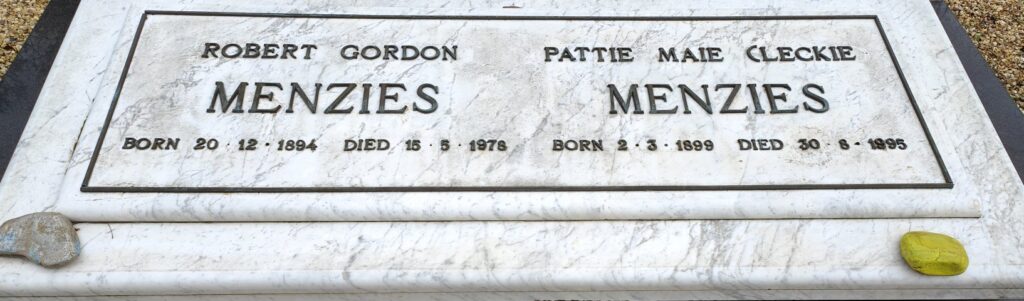
The Prime Ministers Memorial Garden is the resting place of four prime ministers. Because Harold Holt’s body was never recovered after disappearing at sea, the garden features a cenotaph in his honour reading “He loved the sea“.
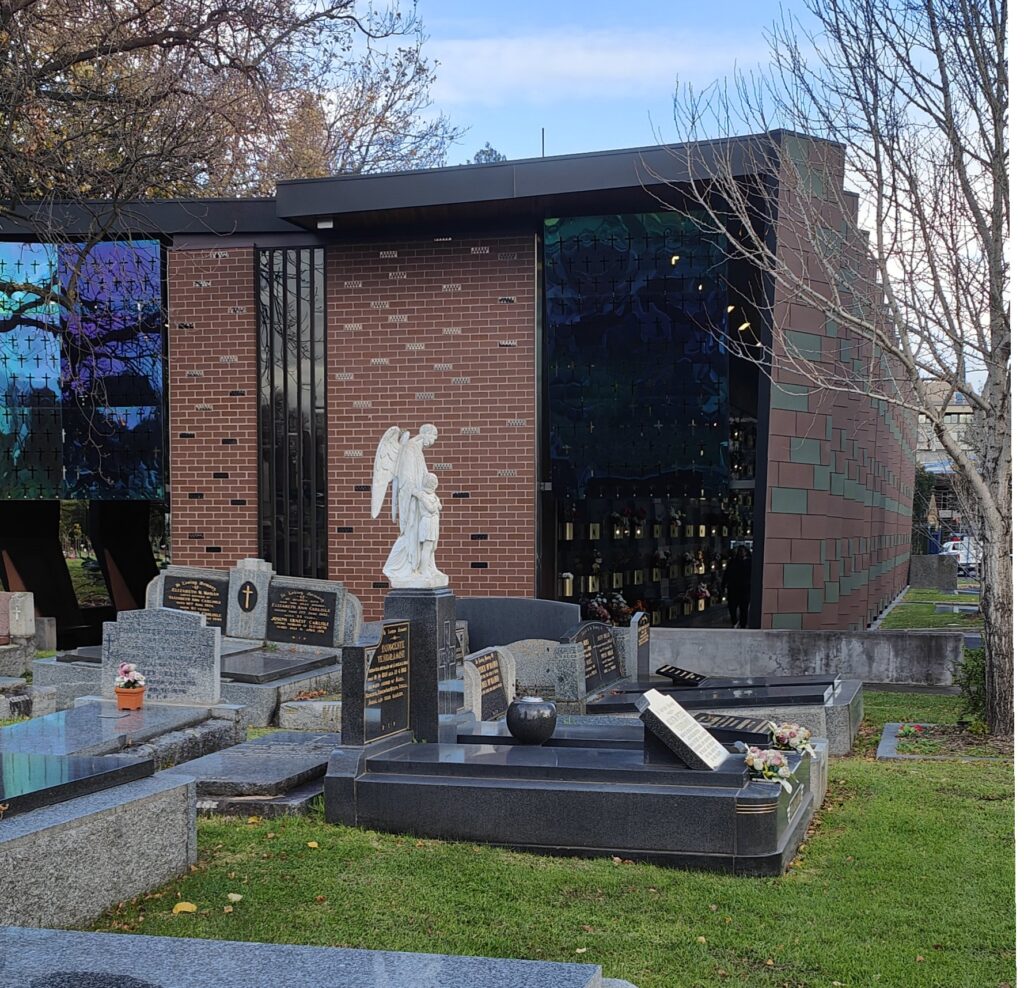
The cemetery trust finances have been boosted in recent years by the building of the Melbourne Mausoleum (1997-98), Gatehouse Mausoleum (2004), St Mary of the Cross Mausoleum (2011-12) and Saint Michael the Archangel Mausoleum (2018). Mausoleum crypts are particularly popular with the Italian community, as can be seen from the names on those that are occupied. They are some of the most expensive real estate in Melbourne: a double crypt can cost $100,000 or more.